
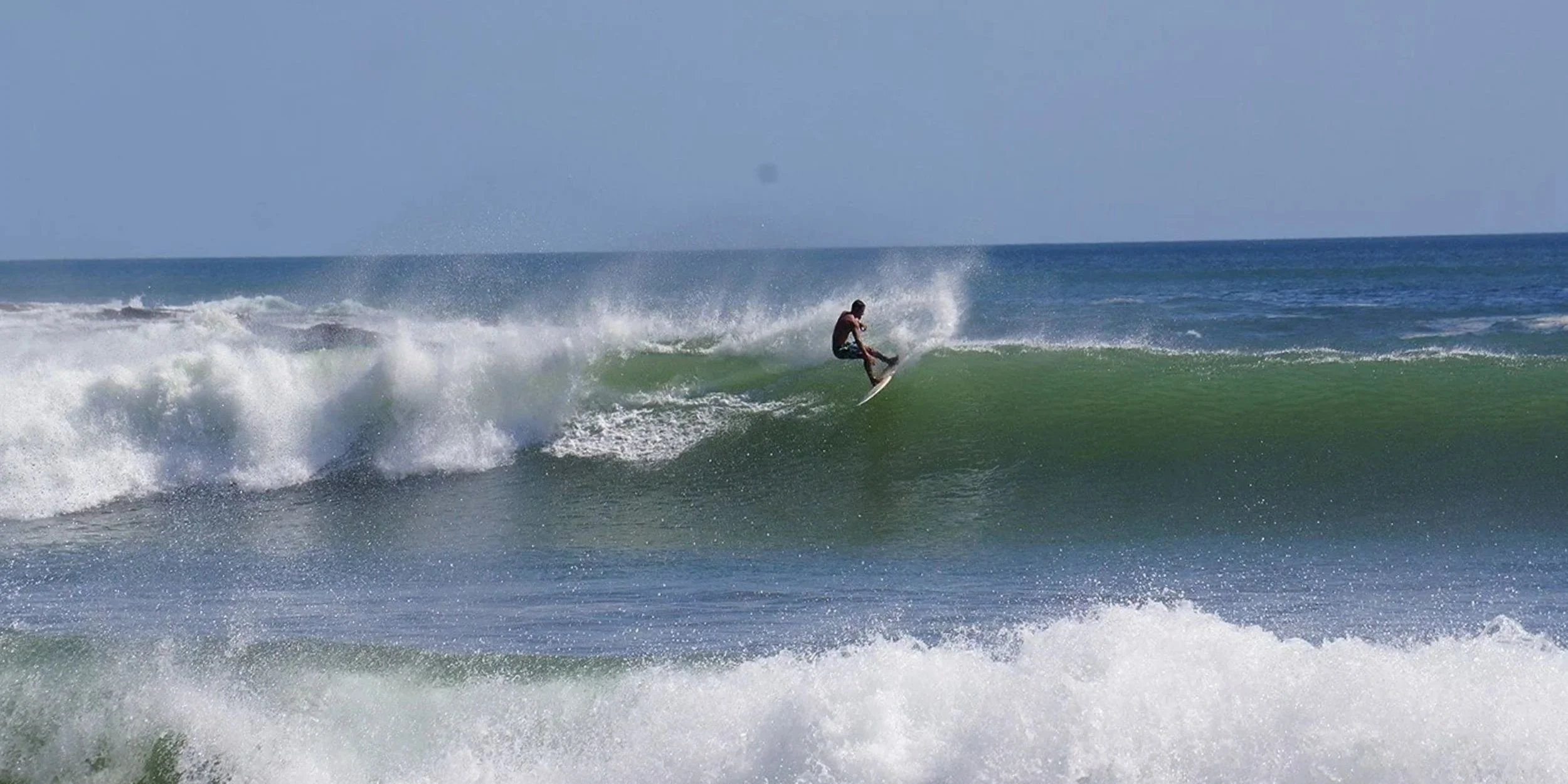
Not all waves break in the same way. The type of surf break depends largely on what is underneath the water and how it shapes the incoming swell. Understanding the different types can help you choose the right spot for your level.
Beach breaks
A beach break is where waves break over a sandy ocean floor. Because sandbars can shift, the waves can break in different places and change throughout the year.
Beach breaks are often great for beginners because you can find smaller, softer waves, although they can also produce powerful waves for more experienced surfers.
Point breaks
A point break happens when waves break along a point of land, usually over sand, rock, or a combination of both. The wave often peels in one direction, creating longer and more predictable rides.
Reef breaks
A reef break breaks over a reef, usually made of coral or rock. Because the bottom is more permanent, the waves tend to break in a more consistent location. Reef breaks can produce excellent waves but may be less forgiving, especially for beginners.
River mouths
At a river mouth, sand and other sediment create underwater banks where waves can break. These sandbars can create fast, powerful and well-shaped waves when the conditions are right.
What type of break is Playa Hermosa?
Playa Hermosa, where Tribu Surf is located, is primarily a beach break with a sandy bottom. The long beach has multiple peaks, meaning waves can break in different places depending on the swell, sandbars, tide and conditions. It offers both left- and right-hand waves.
This makes Playa Hermosa a versatile surf spot for different levels. On smaller days, the beach can offer manageable waves for beginners, while larger swells can create faster and more powerful waves for experienced surfers.
At Tribu Surf, we choose the surf spot based on the day's conditions, tides and your experience level, so you can learn and progress in the right environment.